
In cycling, a partnership is about more than visibility alone. Of course, recognisability in races matters, but for us, the real value lies above all in long-term relationships.
For us at FFWD, teams are not loose sponsorship assets, but partners with whom you build something over time. Relationships in which mutual trust grows, and where product quality, service, and real-world experience come together. That continuity says a lot about how we work as a brand, and why some connections not only last for many years, but are even renewed after a period apart.


Why FFWD works with teams
Supporting talent has been an important driving force for FFWD for many years. At every level, but especially in professional cycling. Not only because it is rewarding to witness performance up close, but also because teams and riders push their equipment to the limit every single day.
That level of demand makes contact with teams incredibly valuable. At this level, the feedback goes beyond speed alone. It is also about stability, durability, handling, and how a wheel performs under pressure, in racing, and during intensive training blocks.
There is another side to it as well. Teams do not only contribute to product development, they also give context to what you want to communicate as a brand. They give a face to the story behind the product. That is why we deliberately choose teams that match the way we work: involved, flexible, and focused on the long term.

Continuity in practice
The fact that many partnerships with FFWD last for years is no coincidence. It is something we invest in consciously. A good example is Metec Solarwatt Cyclingteam, with whom we have worked continuously since 2012. That means we are now in our 15th season together.
Team Flanders is another strong example. The relationship ran from 2014 to 2016 and was picked up again from 2020 onward. This now marks the 10th season in which FFWD and Team Flanders have worked together.
With VolkerWessels, you see something similar. FFWD worked with the team from 2017 to 2020, and again from this year onward, now also including the women’s team.
That return says a lot. Teams do not make decisions based only on performance or product specifications on paper. They come back because relationships remain, because the contact feels right, and because there is trust in what you can expect from each other.

Why teams come back
The foundation of long-term relationships is trust. Of course, product quality plays a leading role in that, but it is not the whole story.
Just as important are good communication, the ability to move quickly, and the flexibility to adapt when needed. It is precisely in moments when something needs to be arranged, when service is required, or when action has to be taken under time pressure, that you really notice how strong a relationship is.
That is why continuity, for us, is not only about what happens in competition, but also about everything around it: how you communicate, how quickly you can act, and how reliable you are when it matters most.

What partnerships contribute to product development
Long-term relationships do not only create recognition, they also provide valuable input for product development. Feedback from racing and training helps us better understand what equipment has to deliver at the highest level. A strong example of this goes back to 2018, when Niki Terpstra, while reconnoitring Paris-Roubaix, expressed the wish to ride wider tyres — and therefore wider rims as well. That moment helped lay the foundation for the development of broader rim concepts.
Another concrete example is the trajectory with Dutch track sprinters Harry Lavreysen and Jeffrey Hoogland. Together with them, the LION disc for the track was developed. A product that is not only the result of technical expertise, but also of the specific demands of absolute top-level sport. This also shows something else about partnerships: they do not just deliver visibility, they are also a direct source of practical knowledge, innovation, and ultimately the wheels that everyone can ride.
More than just cycling
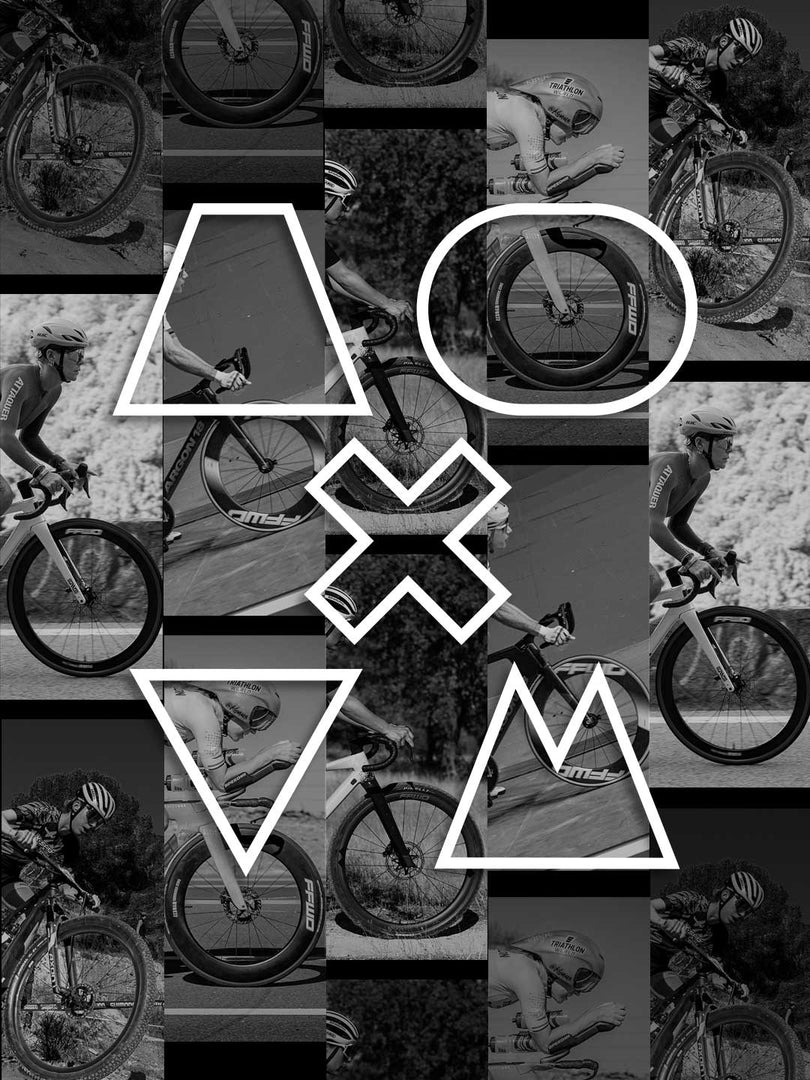
Although this blog focuses on road cycling teams and partnerships, you see the same way of working in other disciplines as well. In both triathlon and gravel, we build relationships based on trust, quality, and mutual commitment.
The context may differ, but the foundation remains the same: working with people and teams who add something meaningful, and from whom you improve together.
Looking forward
Because of the way we work, FFWD is visible not only in races, but across the full breadth of the brand. For that, we are especially grateful to our teams and athletes. They provide a reliable foundation on which we continue to develop our products.
In the coming blogs, we will go deeper into that. Into technology, disciplines, and partnerships that show how performance is built in practice.
Continuity will remain an important part of success in that process. Not only on the podium, but especially in everything that comes before it.